Bedding · Buying guide
How to Choose Sheets Online: Fit, Weave, and Fabric Checks
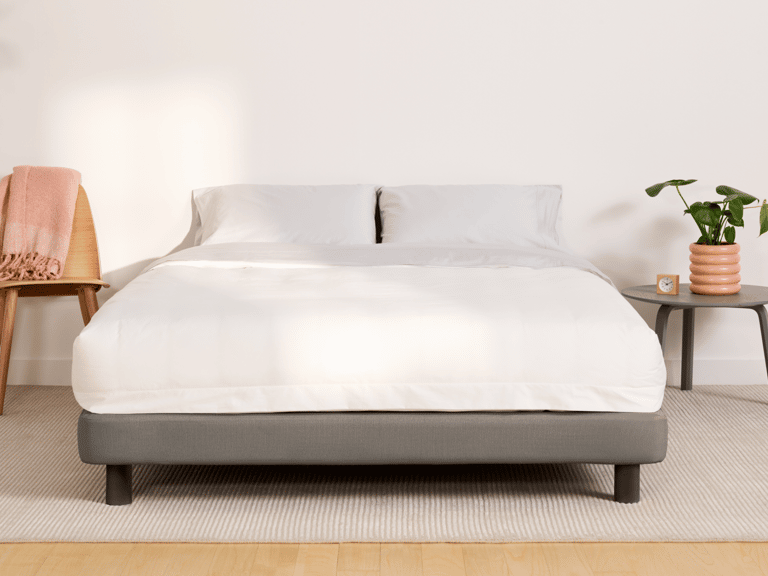
A beautiful bed begins with details you may never see in a product photograph: the depth of your mattress, the structure of a weave, and the way a fabric feels against your skin. When you shop for sheets online, those details are your best guide to a set that fits well, feels right, and holds up to everyday use.
Published October 26, 2026
Online bedding offers an appealing abundance of color, texture, and promise. Crisp white percale, fluid sateen, organic cotton, long-staple fibers: each description suggests a different kind of bedroom. Yet a sheet set can look impeccable on screen and still disappoint at home if its fitted sheet is too shallow, its fabric is warmer than you expected, or its listed contents do not match your bed.
The remedy is not to become an expert in every textile term. It is to slow down before checkout and check a few practical things in the right order. Start with the mattress and its full dressed height. Then consider the weave and fiber, interpret thread count in context, and review the care instructions and set contents. These checks turn buying sheets online from a guessing game into a considered choice.
Below, we look at how to measure for fit, compare percale and sateen, understand fabric descriptions, and read the product page with a more discerning eye.
Measure the bed you actually sleep on
A fitted sheet is designed to wrap around a mattress, but the mattress listed on its original label may not represent the surface you use today. A topper, mattress pad, or protector can add height and change the way a fitted sheet sits. Measure the whole arrangement—not simply the bare mattress—before comparing sheet sizes.
First, confirm the mattress’s length and width. Standard size labels such as Queen and King are useful starting points, but they should not replace measurements, especially for less common sizes, adjustable beds, or older mattresses. Next, measure the depth from the bottom edge to the top sleeping surface. If you use a topper or padded protector, leave it in place while measuring so the final number reflects the complete bed.
Compare that measurement with the fitted-sheet pocket depth stated on the product page. A set described as fitting a mattress up to 18 inches deep, for example, has a different capacity from one made for a shallower profile. Avoid choosing a pocket depth that merely equals your measurement if the fabric is likely to shrink or the mattress has a substantial topper. A little additional room can make the sheet easier to install and less likely to pull loose at the corners.
Do not assume that “deep pocket” has one universal meaning. It is a descriptive phrase, not a consistent measurement across every maker. Look for an actual depth in inches or centimetres, and check whether the stated fit includes a topper. When dimensions are missing, the safest next step is to consult the retailer’s size guide or customer service rather than infer fit from a photograph.
- Measure length and width: Confirm the mattress size instead of relying on a label alone.
- Measure total depth: Include the mattress, topper, pad, and protector you plan to keep on the bed.
- Check the pocket specification: Compare your total depth with the stated maximum and allow for a secure tuck.
- Note any unusual shape: Adjustable bases and split mattresses may require a specific configuration.
On adjustable beds, pay particular attention to the set configuration. A Split King, for instance, generally uses two Twin XL fitted sheets rather than one standard King fitted sheet. The flat sheet and pillowcases may follow a different arrangement again. Read the contents and dimensions for the exact size option you intend to select; a size name by itself does not tell the whole story.
Percale or sateen: choose the feel, not the slogan
Weave influences the hand and character of a sheet. Two sets can both be made from cotton and still feel notably different because their yarns are interlaced in different ways. The familiar comparison is between percale and sateen: one tends toward crisp and airy, the other toward smooth and draped.
Percale: crisp, matte, and breathable
Percale uses a straightforward one-over, one-under weave. Its balanced structure gives the fabric a matte finish and a clean, cool-to-the-touch quality. Many people describe it as fresh or hotel-like, though the feel depends on the cotton, finishing, and laundering as well as the weave. Percale can suit sleepers who prefer less cling, live in a warm climate, or simply like a light, crisp sheet.
New percale may feel firmer than expected. With use and washing, it often softens while retaining its characteristic crispness. It can wrinkle more visibly than sateen, a point worth considering if a smooth, freshly pressed appearance is part of the appeal. For a closer look at the construction and sizing details of a cotton option, see the organic cotton percale sheet set.
Sateen: smooth, fluid, and gently lustrous
Sateen uses a weave that places more yarn across the fabric surface, creating a smoother hand and subtle sheen. It often drapes more closely over the bed and feels soft or silky from the first use. That quality can be especially appealing if you like a polished finish and a little more enveloping warmth. Sateen is not necessarily heavy, but its surface can feel less crisp and airy than percale.
Because a larger proportion of yarn sits on the surface, sateen may be more prone to snagging than a simpler weave, depending on the yarn and construction. Follow the care label and avoid washing it with items that have hooks, zippers, or rough edges. The organic cotton sateen sheet set provides an example of a sateen option; compare its dimensions and care details with your own requirements rather than assuming all sateen sets are identical.
Neither weave is automatically superior. The more useful question is how you want your bed to feel. If you tend to overheat or prefer a crisp surface, percale may be the more natural match. If you like a smoother finish and a soft drape, sateen may be more appealing. Personal preference, bedroom temperature, and the rest of your bedding all matter more than a universal ranking.
Read fiber descriptions with care
The word “cotton” tells you the broad fiber category, but not everything about a sheet’s quality or feel. Product listings may also mention organic certification, cotton variety, yarn construction, or a blend. These details can help you compare options, provided you treat them as information rather than shorthand for guaranteed comfort.
Fiber length and yarn quality can influence softness, strength, and how fabric behaves after repeated laundering. However, terms such as “premium” or “luxury” are often marketing language unless accompanied by useful specifications. Look for a clear fiber breakdown, a named weave, care instructions, and any certification claims the maker provides. If a product is described as organic, check which material is certified and by whom; claims should be specific enough to understand.
Blended fabrics may be chosen for practical reasons, including easier care, wrinkle resistance, or durability. They can also feel different from pure cotton. Neither natural nor blended fibers are inherently right for everyone. Consider what matters in your routine: a particular hand, simpler laundering, a preference for a stated certification, or a fabric that performs comfortably through changing seasons.
Thread count is another specification that invites overinterpretation. It refers to the number of threads counted in a square inch of fabric, but it is not a standalone measure of softness, breathability, or longevity. Fiber quality, yarn size, weave, finishing, and honest construction all contribute to the finished sheet. A higher figure is not automatically better, and extremely high numbers may be difficult to compare across different counting methods.
Use thread count as one data point rather than a verdict. A well-described 270-thread-count percale, for example, may be more appealing to someone seeking a light, crisp feel than a denser sateen. Meanwhile, someone who values a smooth finish may prefer a sateen specification. The weave and your comfort preferences provide essential context that a number alone cannot supply.
Check what the set includes
Images often present a beautifully layered bed, but a product image may show styling pieces that are not part of the purchase. Before ordering, locate the contents list and confirm exactly what comes in the selected size. A set may include a fitted sheet, a flat sheet, and pillowcases; other configurations or individual pieces may differ.
Pillowcase count and dimensions can vary by size. Twin sets may include one pillowcase, while larger sizes often include two. Some King configurations use King pillowcases rather than standard or Queen dimensions. A Split King arrangement may have its own combination of fitted sheets and pillowcases. Check the details for the selected variant, not just the general description at the top of the page.
Also check the flat-sheet measurements if you like a generous tuck, share a bed, or use a particularly thick mattress. For fitted sheets, verify both the mattress size and pocket depth. If your bedding is intended for an adjustable base, look for explicit compatibility and confirm whether separate fitted sheets are required.
Care instructions are part of the purchase
Sheets live close to the body and are washed regularly, so maintenance should be part of your decision. A fabric that feels wonderful but requires more effort than you are willing to give may not be the most practical choice for daily use. Check the recommended water temperature, wash cycle, drying method, and any restrictions on bleach or ironing.
Hot water and high dryer heat can contribute to shrinkage or wear. Follow the maker’s instructions, particularly when a fitted sheet is already close to the limit of your mattress depth. If a set arrives in reusable or biodegradable packaging, that may be a welcome detail, but it does not replace checking how the fabric should be washed and dried. Pre-washing new sheets, where the care label permits, can also help remove packaging residue and reveal how the fabric feels after laundering.
Think about your household’s everyday conditions. Pets, children, frequent spills, or a preference for minimal ironing may affect which colors, weaves, and care requirements feel manageable. A practical sheet is not a compromise in style; it is one that continues to look and feel at home in your real routine.
A considered checklist before checkout
Before placing an order, pause over the product page and confirm the details that matter most:
- Mattress size: Match the listed size to measured length and width.
- Total depth: Include every layer that will remain under the fitted sheet.
- Pocket depth: Confirm the maximum fit and whether a topper is included in that guidance.
- Bed configuration: Check Split King, adjustable-bed, or other special requirements.
- Fiber and weave: Identify the material and whether the fabric is percale, sateen, or another construction.
- Comfort preference: Decide whether you want crisp and airy or smooth and draped.
- Set contents: Verify the flat sheet, fitted sheet, pillowcase quantity, and dimensions.
- Care: Make sure the washing and drying routine suits your household.
- Returns and sizing help: Review the retailer’s policies and ask questions if specifications are unclear.
Customer reviews can add useful context, especially when several buyers mention fit, shrinkage, or how a fabric changes after washing. Read them as individual experiences rather than guarantees. A reviewer’s mattress height, climate, and preferred feel may be different from yours, so the product specifications should remain the foundation of your choice.
The final touch is the one that feels right
Choosing sheets online is a small exercise in translating sensation into specifications. “Cool” may point you toward a breathable weave and lighter hand; “soft” may suggest a smoother surface; “easy to live with” may place care instructions at the top of your list. None of these preferences is more refined than another. The best bedding is the bedding that feels comfortable, fits securely, and suits the way you care for it.
Measure the complete bed before browsing. Compare percale and sateen by their characteristic feel, not by the prestige of a label. Read fiber and thread-count claims in context, then confirm the exact contents and care routine. With those essentials settled, the choice becomes less about decoding a page of marketing language and more about creating a bed that feels intentionally your own.
Frequently asked questions
How do I know what fitted-sheet depth to buy?
Measure from the bottom edge of the mattress to the top of the surface, including any topper, pad, or protector. Compare that total with the fitted-sheet pocket depth stated for the size you are buying. If you are between measurements, or the product page does not explain its fit, ask the retailer before ordering.
Are percale sheets cooler than sateen?
Percale is commonly chosen for its crisp, airy feel, while sateen tends to feel smoother and drape more closely. These are general differences, not guarantees of a particular sleep temperature. Fiber, fabric weight, room conditions, and personal comfort all play a role.
Does a higher thread count mean better sheets?
Not necessarily. Thread count is one specification, but it does not describe fiber quality, weave, finishing, or care. Compare the complete fabric description and select according to the feel and performance you prefer.
Should I wash new sheets before using them?
Check the care instructions first. If washing is permitted, laundering before first use can refresh the fabric and give you a better sense of its feel. Use the recommended settings to help limit shrinkage and preserve the material.